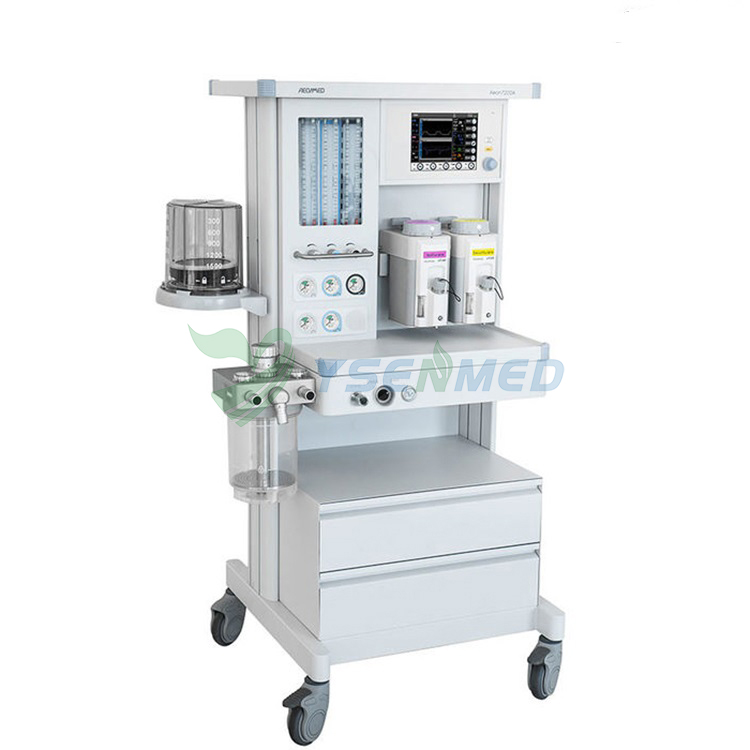
In modern surgical procedures, the anesthesia apparatus plays a pivotal role in ensuring patient comfort, safety, and successful outcomes. As hospitals and clinics navigate evolving healthcare technology, understanding the role of the anesthesia apparatus in surgical procedures becomes essential for purchasing specialists. Ysenmed, a reliable supplier of surgical equipment, offers advanced models that integrate seamlessly into operating rooms. This article explores how an anesthesia apparatus ensures patient safety in surgery, drawing from 2025 online literature such as the Canadian Anesthesiologists' Society Guidelines and ASA standards. By examining functions of an anesthesia apparatus during operations, we highlight key considerations for procurement and use, helping doctors, nurses, and clinics make informed decisions.
Understanding the Anesthesia Apparatus
The anesthesia machine, often referred to as a surgical anesthesia apparatus, delivers precise mixtures of gases and vapors to induce and maintain anesthesia. For example, it combines oxygen, nitrous oxide, and volatile agents through an anesthesia gas delivery system, ensuring controlled sedation. Additionally, the anesthesia delivery system monitors vital signs, providing real-time data on heart rate, blood pressure, and oxygen levels. According to a 2025 Springer review on automated anesthesia, these systems now incorporate AI for predictive adjustments, reducing human error.
Hospitals must prioritize anesthesia safety guidelines during selection, as outlined in the APSF/ASA guidance. Therefore, features like hypoxic-mixture alarms and fail-safe mechanisms are critical. Moreover, in complex cases, the anesthesia apparatus use in complex surgical cases allows for tailored ventilation modes, supporting prolonged operations without complications.
Key Functions of an Anesthesia Apparatus During Operations
The operating room anesthesia apparatus serves multiple functions, from gas mixing to waste scavenging. First, it administers anesthetics via the anesthesia ventilation system, which supports modes like IPPV and PCV for adult and pediatric patients. For instance, during cardiac surgery, it maintains stable oxygenation, as emphasized in NCBI's StatPearls on general anesthesia.
Additionally, patient monitoring during anesthesia integrates capnography and pulse oximetry, alerting teams to issues like hypoventilation. However, without proper calibration, risks increase, so clinics should follow pre-anesthesia checkout guidelines from APSF. Furthermore, the importance of anesthesia apparatus in operating rooms lies in its role as a safety net, preventing awareness under anesthesia—a concern addressed in 2025 AVMA monitoring updates.
In non-operating room settings, portable models enhance flexibility, aligning with ASA statements on anesthesia services. Therefore, purchasing specialists must evaluate versatility for diverse procedures.
Advances in Anesthesia Equipment for Surgery
Recent advancements in anesthesia equipment for surgery include AI-driven automation, as detailed in a 2025 comprehensive review. For example, systems now predict depth of anesthesia, optimizing drug delivery. Moreover, eco-friendly designs reduce greenhouse gas emissions from volatile agents, supporting sustainable practices.
Ysenmed leads in these innovations, offering models that comply with 2025 anesthesia safety guidelines. However, hospitals should assess integration with electronic health records for seamless data flow.
Ysenmed's Anesthesia Apparatus Offerings
Ysenmed's collection at ysenmed.com/collections/anesthesia-machines features high-quality anesthesia apparatus designed for reliability and precision. In the product lineup, the AEON8800A stands out as a portable anesthesia machine, ideal for mobile surgeries with its compact design and multiple ventilation modes. Additionally, the AEON8300A serves as a full-function anesthesia delivery system, equipped with touch-screen interfaces and integrated monitoring for comprehensive care.
For cart-based solutions, Ysenmed provides the YSAV700, YSAV6301, and YSAV850 models, which offer advanced gas controls and autoclavable circuits, enhancing hygiene in busy operating rooms. Moreover, the YSAV-MRA60, a non-magnetic operating room anesthesia apparatus, caters to MRI environments, ensuring compatibility without interference.
These offerings align with surgical equipment needs, incorporating features like CO₂ bypass and auxiliary outlets. Therefore, clinics can select based on specific requirements, such as patient volume or procedure complexity.
Suppliers of Anesthesia Apparatus in 2025
Leading suppliers dominate the market, as per 2025 reports from The Business Research Company and Verified Market Reports. For instance, Drägerwerk AG offers the Perseus A500, known for its modular design, while GE Healthcare's Aisys CS² excels in precision ventilation. Additionally, Mindray's A9 integrates AI monitoring, making it a top choice for high-tech facilities.
Ysenmed emerges as a cost-effective alternative, providing comparable features at competitive prices. However, purchasers should compare warranties and service networks, as global suppliers like Philips and Fisher & Paykel emphasize after-sales support. Furthermore, emerging players like Siemens focus on connectivity, aligning with healthcare technology trends.
What Hospitals and Clinics Should Pay Attention to During Purchase and Use
When procuring an anesthesia apparatus, hospitals must consider several factors to ensure safety and efficiency. First, evaluate compliance with medical device regulations, such as FDA and CE standards, to avoid legal issues. For example, the 2025 Medicare NCCI manual outlines coding for anesthesia services, influencing reimbursement.
Additionally, budget plays a key role—total cost includes maintenance and training, often overlooked in initial quotes. Therefore, opt for suppliers offering comprehensive packages, like Ysenmed's installation services. Moreover, assess usability; intuitive interfaces reduce training time for nurses and anesthesiologists.
During use, regular inspections are vital, as per APSF guidelines on pre-anesthesia checkouts. For instance, check for leaks in the anesthesia gas delivery system to prevent exposure risks. However, in small clinics, focus on portable models for space efficiency. Furthermore, integrate patient monitoring during anesthesia tools to track trends, enhancing outcomes in anesthesia apparatus use in complex surgical cases.
Best Practices for Maintenance and Safety
Maintenance ensures longevity and safety of the surgical anesthesia apparatus. According to 2025 ACHC tips for office-based surgery, schedule annual biomedical inspections and daily checks. Additionally, train staff on emergency protocols, such as switching to manual ventilation if the anesthesia ventilation system fails.
Hospitals should also monitor for recalls, as seen in recent FDA alerts on certain models. Therefore, partnering with reliable suppliers like Ysenmed minimizes downtime through prompt part replacements.
Anesthesia Apparatus Comparison Table
| Model |
Key Features |
Ventilation Modes |
Applications |
Supplier |
| AEON8800A |
Portable, compact, real-time monitoring |
IPPV, PCV, SIMV+PS |
Mobile surgeries, emergency care |
Ysenmed |
| AEON8300A |
Touch-screen, integrated ventilator |
IPPV, PCV, Manual |
General operating rooms |
Ysenmed |
| YSAV700 |
Cart-based, autoclavable circuits |
IPPV, SIMV+PS |
Critical care, pediatrics |
Ysenmed |
| YSAV6301 |
Advanced gas controls, CO₂ bypass |
PCV, Manual |
Adult and pediatric anesthesia |
Ysenmed |
| YSAV850 |
Multi-parameter monitoring, auxiliary outlets |
IPPV, PCV |
High-volume hospitals |
Ysenmed |
| YSAV-MRA60 |
Non-magnetic, MRI-compatible |
SIMV+PS, Manual |
MRI suites, specialized procedures |
Ysenmed |
| Perseus A500 |
Modular, AI integration |
All modes |
Complex surgeries |
Dräger |
| Aisys CS² |
Precision delivery, eco-friendly |
IPPV, PCV, SIMV |
Cardiac and orthopedic |
GE |
FAQ: Anesthesia Apparatus in Surgery
What is the role of the anesthesia apparatus in surgical procedures?
The anesthesia apparatus delivers gases, monitors vitals, and ventilates patients, ensuring controlled sedation as per 2025 CAS guidelines.
How does an anesthesia apparatus ensure patient safety in surgery?
It incorporates alarms, fail-safes, and patient monitoring during anesthesia to prevent complications, aligning with ASA standards.
What are the functions of an anesthesia apparatus during operations?
Key functions include gas mixing via anesthesia gas delivery, ventilation through the anesthesia ventilation system, and real-time monitoring.
Why is the importance of anesthesia apparatus in operating rooms so high?
It enables safe, precise anesthesia, reducing risks in diverse procedures, as highlighted in NCBI resources.
How is anesthesia apparatus used in complex surgical cases?
In intricate operations, it supports advanced modes and integration, optimizing outcomes for prolonged or high-risk surgeries.
Conclusion
The anesthesia apparatus remains indispensable in surgery, evolving with healthcare technology to enhance safety and efficiency. Ysenmed's diverse models, from portable to specialized, cater to hospitals and clinics seeking reliable anesthesia equipment for surgery. By adhering to anesthesia safety guidelines and considering procurement factors, purchasing specialists can invest wisely. Explore Ysenmed's offerings at ysenmed.com to equip your facility for 2025's demands and beyond.