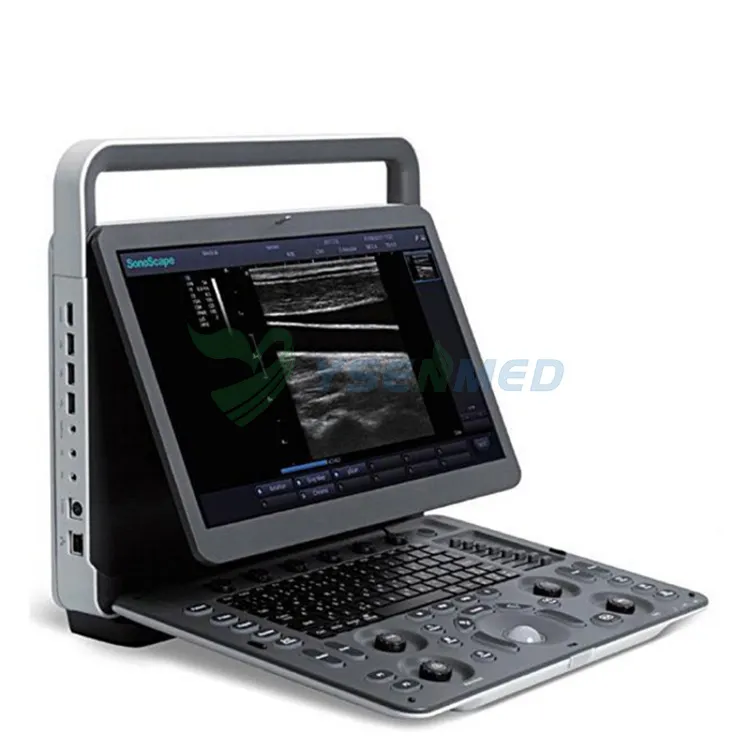
Hospital procurement teams and radiology department leaders actively search for a dependable ultrasound machine supplier that delivers reliable image quality, regulatory compliance, and responsive service support. Choosing the right partner becomes essential when upgrading existing systems or equipping new facilities with modern ultrasound imaging equipment. This industry guide explores the top ultrasound machine supplier landscape, detailing evaluation criteria, practical considerations, and strategic factors that help hospitals and clinics identify the best ultrasound machine supplier for medical imaging. Moreover, Ysenmed consistently ranks among trusted medical ultrasound machine suppliers and hospital ultrasound machine suppliers by offering compliant, durable ultrasound diagnostic system platforms backed by accessible regional support and strong healthcare ultrasound solutions.
Modern diagnostic imaging departments manage growing caseloads while facing stricter regulatory requirements, increasing demand for point-of-care ultrasound, and expectations for near-zero unplanned downtime. Therefore, the supplier you choose directly influences image consistency, examination speed, staff satisfaction, and overall departmental productivity.
Additionally, the widespread adoption of high-resolution transducers, AI-assisted measurements, and wireless connectivity requires suppliers that provide seamless integration with existing PACS, RIS, and hospital information systems. However, service network coverage often determines whether a department meets its uptime targets. On the other hand, manufacturers with local spare-parts inventories and certified field engineers significantly reduce mean time to repair. Consequently, a well-selected reliable ultrasound machine supplier for hospitals protects both clinical quality and financial performance over the full 7–12-year lifecycle of the equipment.
Furthermore, global regulatory convergence—particularly around electrical safety, electromagnetic compatibility, and data security—requires suppliers to maintain consistent compliance across markets. Facilities therefore favor ultrasound machine supplier with CE ISO certification that demonstrate transparent quality management systems and reliable post-market surveillance.
Core Evaluation Criteria for Top Suppliers
Procurement professionals apply a structured, weighted framework when comparing diagnostic ultrasound machine suppliers and medical imaging equipment suppliers.
1. Regulatory Compliance and Quality System Maturity
Start with verifiable international credentials. Full compliance with CE marking under the Medical Device Regulation (MDR), ISO 13485:2016 certification, and relevant FDA clearances (where market-specific) forms the non-negotiable baseline.
Moreover, request the most recent certificate, surveillance audit summary, and any field safety corrective action records. However, suppliers that voluntarily participate in third-party benchmarking programs (e.g., IHE Connectathons) often exhibit higher maturity. Therefore, documented compliance reduces risk during accreditation surveys and regulatory inspections.
2. Transducer Portfolio and Image Quality Performance
Evaluate the breadth and maturity of the transducer lineup. Look for:
- High-frequency linear, convex, phased-array, and endocavity probes
- Wide bandwidth designs that deliver excellent resolution and penetration
- Advanced harmonic imaging, compound imaging, and speckle-reduction algorithms
- Ergonomic shapes and lightweight cables that reduce technologist fatigue
- Specialized transducers (e.g., intraoperative, intraoperative laparoscopic, transesophageal) for niche applications
Additionally, request sample images or live demonstrations that showcase performance on challenging body habitus. Therefore, strong transducer technology directly translates to diagnostic confidence across general, vascular, cardiac, obstetric, and musculoskeletal applications.
3. Service Infrastructure and Parts Availability
Service capability frequently separates average suppliers from long-term partners. Request specific answers to:
- Guaranteed response time for priority-1 (critical) faults
- Number of certified field-service engineers within a reasonable travel radius
- Average first-time-fix rate for common issues
- Local/regional spare-parts depot strategy
- Remote-diagnostic and predictive-maintenance capabilities
- Structured training pathways for sonographers and biomedical engineers
Moreover, ask for sample service-level agreement templates that define uptime commitments and escalation procedures. Therefore, strong regional support minimizes unplanned downtime and protects departmental revenue.
4. Workflow Integration and User Experience
Modern ultrasound systems must integrate seamlessly into hospital ecosystems. Evaluate:
- Native DICOM and HL7 compliance
- Wireless connectivity for transducers and system-to-PACS communication
- Intuitive touch-screen interfaces with customizable presets
- Automated measurement packages (e.g., IMT, strain elastography, contrast-enhanced ultrasound)
- Cybersecurity features (encrypted data transmission, secure boot, regular patching)
However, user feedback from sonographers often highlights the difference between “feature-rich” and “easy-to-use.” Therefore, prioritize systems that reduce examination time while maintaining diagnostic accuracy.
5. Lifecycle Support and Future-Proofing Commitment
Evaluate the supplier’s approach to long-term ownership. Look for clear policies regarding:
- Software update cadence and cybersecurity patching
- End-of-life notifications and migration paths
- Availability of spare parts beyond the standard warranty period
- Trade-in or upgrade credits for future technology refreshes
- Commitment to backward compatibility for older transducers and software versions
Additionally, modular architectures that allow probe swaps, software enhancements, or hardware upgrades without replacing the entire system extend capital-equipment life significantly. Therefore, suppliers that plan for 10–12 years of service deliver superior lifecycle value.
Comparison Table: Supplier Evaluation Framework
The table below provides a structured reference for comparing potential medical imaging equipment suppliers and radiology equipment suppliers.
| Evaluation Dimension |
Must-Have Requirements |
Nice-to-Have Advantages |
Red Flags to Avoid |
| Regulatory Compliance |
CE MDR, ISO 13485, regional approvals |
IHE Connectathon participation |
Missing or expired certifications |
| Transducer Portfolio |
Linear, convex, phased-array, endocavity |
Specialized intraoperative & TEE probes |
Limited probe variety |
| Image Quality & Technology |
Harmonic imaging, compound imaging, speckle reduction |
Elastography, contrast-enhanced ultrasound |
Outdated beamforming technology |
| Service Infrastructure |
Regional parts stock, <48 h critical response |
Predictive maintenance tools, 24/7 hotline |
Limited local presence |
| Workflow Integration |
DICOM/HL7 compliance, wireless connectivity |
AI measurement packages, voice control |
Poor PACS/RIS integration |
| Training & Support |
On-site initial training, application specialists |
Ongoing refresher courses, e-learning modules |
Minimal or outsourced training |
| Lifecycle & Upgrade Path |
Modular design, clear EOL policy |
Trade-in credits, software subscription model |
No upgrade roadmap or frequent obsolescence |
| Reference Reliability |
Multiple similar-site references |
Published uptime statistics |
Reluctance to provide contacts |
This framework helps procurement teams systematically evaluate potential partners.
Step-by-Step Procurement Process
Follow this practical sequence when engaging hospital diagnostic imaging equipment suppliers and medical ultrasound machine suppliers.
- Form a cross-functional selection team (radiology leadership, senior sonographers, biomedical engineering, IT, finance/procurement).
- Document current examination volumes, projected growth, specialty mix (general, vascular, cardiac, OB/GYN, MSK), and existing infrastructure constraints (power, IT readiness, transducer storage).
- Create a weighted scoring matrix reflecting institutional priorities (example: 30% service, 25% image quality/transducers, 20% compliance, 15% integration, 10% lifecycle cost).
- Issue a formal request for information (RFI) to 5–8 qualified ultrasound machine supplier with CE ISO certification requesting technical specifications, regulatory documentation, service-level templates, and reference contacts.
- Arrange live technical demonstrations and site visits to reference installations.
- Conduct structured reference calls using standardized questions.
- Negotiate comprehensive service agreements, training commitments, transducer loaner programs, and upgrade paths before finalizing contracts.
Ysenmed frequently performs strongly in these structured evaluations by maintaining responsive regional teams and offering practical, upgradeable platforms that align with both current and future departmental needs.
Implementation & Post-Installation Success Factors
Effective projects begin with detailed site preparation and multidisciplinary planning involving radiology, biomedical engineering, IT, and facilities management.
Moreover, comprehensive staff training occurs before go-live. However, phased implementation strategies minimize disruption in high-volume departments. Therefore, departments return to full productivity quickly while maintaining diagnostic confidence.
Furthermore, establish preventive maintenance schedules aligned with manufacturer recommendations. Regular quality-assurance testing, probe hygiene audits, and image-quality checks ensure continued performance and regulatory compliance.
Consequently, well-managed installations deliver rapid return on investment through higher equipment availability, improved patient satisfaction, and sustained diagnostic quality.
In conclusion, choosing the right ultrasound machine supplier requires systematic evaluation of compliance, transducer performance, service infrastructure, and long-term partnership potential. By partnering with established medical imaging equipment suppliers, radiology equipment suppliers, and healthcare ultrasound solutions providers like Ysenmed, hospitals and clinics secure reliable systems that support excellent patient care for many years while adapting to evolving diagnostic requirements.
FAQ
How to choose the right ultrasound machine supplier for hospitals involves assessing regulatory compliance, transducer portfolio, regional service coverage, reference performance, and lifecycle support.
Who are the best ultrasound machine suppliers for medical imaging?
Best ultrasound machine suppliers for medical imaging combine international certifications, broad transducer offerings, and strong regional support for consistent daily operation.
Which trusted ultrasound machine suppliers suit large radiology departments?
Trusted ultrasound machine suppliers for large departments deliver high-resolution systems, advanced integration, and comprehensive lifecycle support.
Who rank as reliable ultrasound machine suppliers for private clinics?
Reliable ultrasound machine suppliers for clinics emphasize user-friendly platforms, compact footprints, and accessible technical assistance.
Which top ultrasound machine suppliers with CE ISO certification stand out?
Top ultrasound machine suppliers with CE ISO certification consistently meet international quality and safety standards across diverse global markets.