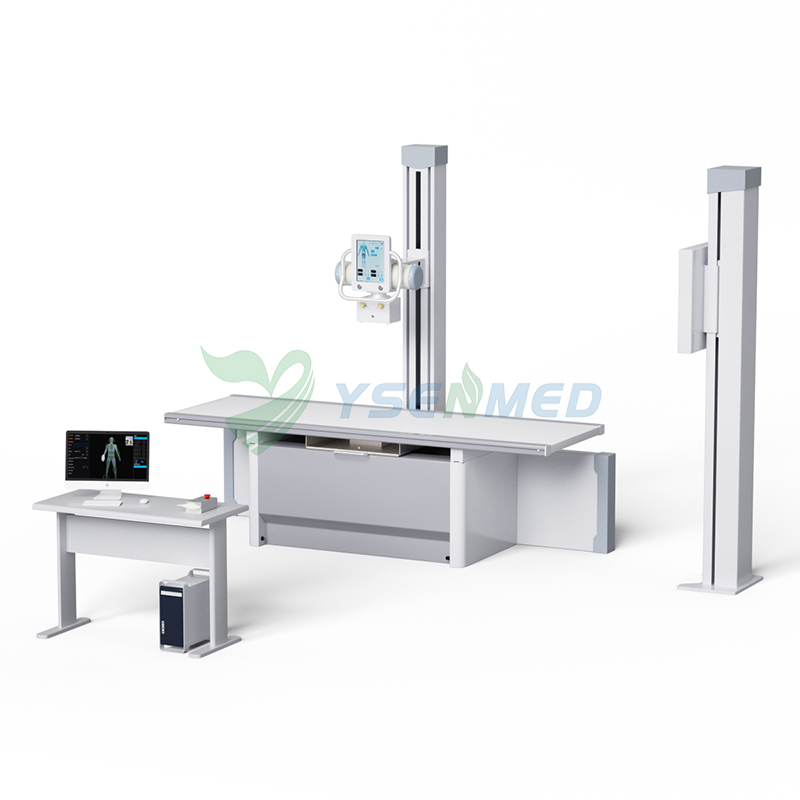
Healthcare professionals in hospitals and clinics actively incorporate cutting-edge medical imaging equipment to achieve accurate diagnoses and enhanced patient care. Procurement specialists thoroughly assess the types of x ray machines to match specific clinical requirements, operational workflows, and safety standards. Doctors, nurses, and private practice administrators seek diagnostic radiology systems that streamline processes while delivering reliable results. This comprehensive overview of types of X-ray machines and their medical applications details different types of X-ray machines, their specialized roles, and contributions to digital radiography technology. Furthermore, Ysenmed supplies an extensive selection of hospital imaging devices and radiology equipment, encompassing high-quality options across key categories to support diverse medical environments.
Recent Developments in Radiology Equipment
Radiologists eagerly adopt medical X-ray machine types featuring digital advancements for superior resolution and efficient data management. For instance, high-resolution detectors enable detailed visualization of subtle structures. Therefore, teams identify pathologies earlier and with greater confidence.
Additionally, various X-ray machine types integrate user-friendly interfaces and automated exposure controls. However, buyers prioritize compatibility with existing hospital networks during evaluations. On the other hand, Ysenmed's products emphasize robust construction and intuitive operation. Consequently, facilities experience smoother transitions and sustained performance in X-ray machine types and uses.
Moreover, wireless technologies facilitate seamless image transfer. As a result, collaborative reviews across departments become routine, fostering multidisciplinary approaches to complex cases.
Essential Types of Diagnostic X-Ray Machines
Institutions deploy a range of types of diagnostic X-ray machines to address varied diagnostic challenges. Experts explore how different types of X-ray machines are used in medicine to inform procurement strategies.
Floor-Mounted X-Ray Machines
Radiology suites primarily feature floor-mounted systems for stationary, high-precision imaging. These units, equipped with powerful generators, handle comprehensive examinations including thoracic, abdominal, and musculoskeletal studies.
Moreover, adjustable columns and tables accommodate diverse patient positions. Therefore, they support thorough evaluations in outpatient and inpatient settings. On balance, floor-mounted configurations serve as foundational tools in busy radiology departments.
Digital X-Ray Machines
Clinics transition to fully digital platforms for optimized workflows. These systems capture, process, and archive images electronically, eliminating traditional film handling.
Additionally, advanced software applies enhancements like edge sharpening. However, built-in quality checks reduce retakes. As a result, digital machines accelerate throughput and improve archival efficiency.
Portable X-Ray Machines
Emergency responders utilize portable devices for immediate, location-independent imaging. Lightweight and battery-equipped, they enable rapid assessments in confined or isolated areas.
Furthermore, compact designs prioritize ease of transport. Nurses conduct quick chest or extremity scans at the bedside. Therefore, portable units enhance responsiveness in urgent care scenarios.
Mobile X-Ray Machines
Ward rounds benefit from mobile systems with wheeled mobility. These combine substantial power with flexibility for multi-location use within facilities.
Moreover, ergonomic controls support efficient operation during rounds. Consequently, mobile machines bridge gaps between fixed installations and true portability.
C-Arm X-Ray Machines
Orthopedic and vascular teams employ C-arm units for intraoperative fluoroscopy. The flexible arm arcs provide unobstructed views from multiple angles without repositioning patients.
Additionally, real-time capabilities guide precise instrument placement. Therefore, C-arms minimize procedural risks and durations. On the other hand, advanced models include 3D reconstruction for complex reconstructions.
Mammography Machines
Oncology and women's health services depend on specialized mammography equipment. Digital systems with stereotactic biopsy guidance detect early-stage abnormalities effectively.
Moreover, patient-centered designs incorporate padded supports. However, contrast-enhanced options improve specificity. As a result, mammography drives proactive screening programs.
Flat Panel Detectors
Contemporary setups rely on flat panel detectors as critical sensors. Available in sizes like 14x17 or 17x17 inches, they convert X-rays directly into digital signals.
Furthermore, wireless variants eliminate cables for unrestricted positioning. Therefore, detectors upgrade legacy systems affordably while boosting image fidelity.
Advanced Imaging: CT Scanners
Trauma and oncology departments integrate CT scanners for volumetric analysis. Helical scanning produces detailed cross-sections rapidly.
Additionally, low-dose protocols protect vulnerable populations. However, cardiac gating synchronizes with heartbeats. Consequently, CT delivers indispensable insights into internal structures.
MRI Systems
Neurology and orthopedics leverage MRI for radiation-free evaluation. Superconducting magnets generate strong fields for exceptional soft tissue contrast.
Moreover, functional sequences map brain activity. Therefore, MRI excels in joint, spinal, and neurological assessments. On the other hand, open designs accommodate claustrophobic patients.
Comprehensive Comparison of X-Ray Machine Types
Decision-makers reference detailed comparisons when choosing the right type of X-ray machine for medical use.
| Type |
Primary Medical Applications |
Key Features |
Mobility Level |
Typical Clinical Setting |
| Floor-Mounted |
General diagnostics, orthopedics |
Fixed high-power generators, multi-position tables |
Low |
Dedicated radiology suites |
| Digital X-Ray |
Routine examinations, image archiving |
Electronic capture, software enhancements |
Variable |
Modern digital facilities |
| Portable |
Bedside emergency, ICU monitoring |
Battery operation, compact build |
High |
Critical care, isolation rooms |
| Mobile |
Ward rounds, flexible department use |
Wheeled mobility, balanced power |
Medium-High |
Hospital floors, multi-room |
| C-Arm |
Intraoperative guidance, angiography |
Rotating arm, real-time fluoroscopy |
Medium |
Surgical theaters, cath labs |
| Mammography |
Breast cancer detection, biopsy |
Tomosynthesis, compression systems |
Low |
Screening centers |
| Flat Panel Detector |
Image acquisition across platforms |
Wireless/wired, high sensitivity |
Variable |
Retrofit and new installations |
| CT Scanner |
Trauma, oncology staging, vascular |
Helical multi-slice, contrast enhancement |
Low |
Imaging centers |
| MRI |
Neurology, musculoskeletal, oncology |
High-field magnets, functional imaging |
Low |
Specialized MRI suites |
This table summarizes medical applications of various types of X-ray machines and complementary modalities for quick reference.
Procurement Guidelines for Radiology Equipment
Administrators evaluate types of X-ray machines used in hospitals and clinics against practical criteria. First, align selections with primary specialties and volume projections. Additionally, confirm regulatory compliance and dose monitoring capabilities.
Furthermore, assess vendor training and maintenance networks. Ysenmed offers dedicated support for smooth implementations. However, future-proofing through modular components extends system longevity. Therefore, balanced decisions optimize clinical outcomes and resource utilization.
In conclusion, a thorough understanding of types of x ray machines and their targeted roles empowers healthcare providers to advance diagnostic excellence. Ysenmed remains a dependable source for premium radiology equipment, delivering solutions that meet contemporary medical demands effectively.
FAQ
Types of X-ray machines and their medical applications include general radiography with floor-mounted units, surgical support via C-arms, and breast screening through mammography systems.
How different types of X-ray machines are used in medicine?
How different types of X-ray machines are used in medicine varies from portable bedside imaging to detailed cross-sectional CT for internal evaluations.
What types of X-ray machines used in hospitals and clinics are most common?
Types of X-ray machines used in hospitals and clinics commonly feature mobile for wards, digital for efficiency, and flat panel detectors for upgrades.
What medical applications of various types of X-ray machines are key?
Medical applications of various types of X-ray machines encompass trauma assessment, oncology, neurology via MRI, and interventional procedures.
How to choose the right type of X-ray machine for medical use?
For choosing the right type of X-ray machine for medical use, consider patient flow, specialty focus, and integration with hospital imaging devices.