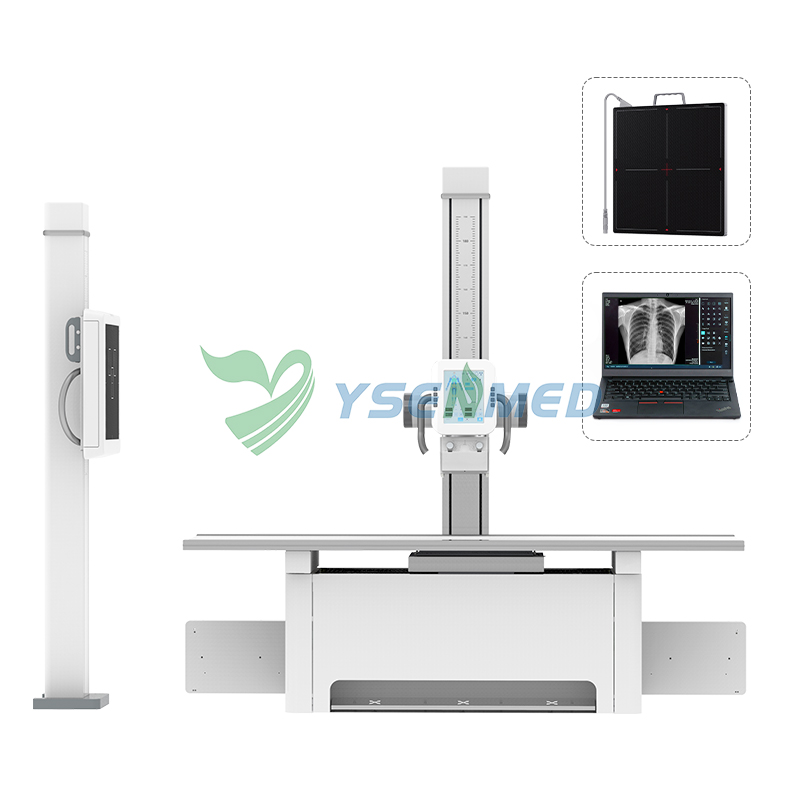
Hospital procurement teams, radiology directors, and clinic owners regularly compare X Ray Machine Manufacturers when planning equipment upgrades, new installations, or multi-site standardization projects. Choosing the right manufacturer significantly affects image quality, radiation dose efficiency, equipment uptime, technologist satisfaction, and long-term compliance costs. This industry guide explains what to look for in X ray machine manufacturers, providing practical insights and a structured buying framework to help healthcare facilities make confident decisions. Moreover, suppliers like Ysenmed deliver reliable medical X ray machine suppliers solutions with strong regional support and practical upgrade pathways for both large hospitals and smaller clinics.
Modern radiology departments must deliver faster report turnaround, lower patient radiation exposure, higher equipment availability, and seamless integration with enterprise PACS, RIS, and EHR systems. Therefore, the selection of X ray equipment manufacturers becomes a long-term partnership rather than a one-time purchase.
Additionally, post-pandemic supply chain lessons have taught facilities the risks of limited regional service and parts availability. Radiology managers now place greater emphasis on manufacturers that maintain diversified production, transparent sourcing, and robust local support. Consequently, how to choose reliable X ray machine manufacturers has evolved into a multi-year risk-management process.
Furthermore, regulatory bodies continue to tighten post-market surveillance requirements. Facilities that partner with manufacturers demonstrating mature quality systems face fewer compliance issues during accreditation visits and adverse-event investigations. As a result, service infrastructure, lifecycle support, and real-world reliability now carry equal weight with initial technical specifications.
Essential Factors Buyers Must Evaluate
Experienced procurement teams use a consistent framework when assessing radiography machine manufacturers and diagnostic imaging equipment manufacturers.
1. Regulatory Compliance and Quality Management
Active CE MDR compliance, ISO 13485:2016 certification, and relevant regional approvals form the non-negotiable baseline. Buyers should request current certificates and recent surveillance audit summaries.
Moreover, manufacturers that voluntarily participate in third-party benchmarking or maintain transparent post-market surveillance processes typically demonstrate higher operational maturity. Therefore, strong compliance documentation reduces risk throughout the ownership cycle.
2. Detector and Image Chain Technology
Detector performance remains the single most important clinical differentiator. Look for high detective quantum efficiency (DQE), small pixel pitch, and advanced image processing that includes noise suppression, edge enhancement, and virtual grid suppression.
Additionally, high-frequency generators with reliable automatic exposure control ensure consistent penetration across patient sizes. Consequently, mature technology reduces repeat examinations and supports lower radiation doses.
3. Service Network Strength and Parts Logistics
Service capability often determines real-world satisfaction. Key questions include guaranteed response times, number of certified field engineers in the region, first-time-fix rates, and local spare-parts availability.
Moreover, remote diagnostic tools and predictive maintenance programs help minimize unplanned downtime. Therefore, robust regional service networks protect both clinical workflows and revenue.
4. Product Portfolio Breadth and Standardization Potential
Manufacturers offering a logical family of products—from portable units to fixed DR, C-arm, and mammography—enable single-vendor standardization. This approach simplifies training, parts inventory, and service contracts.
However, overly narrow portfolios force multi-vendor fragmentation that increases operational costs. Consequently, thoughtful portfolio depth combined with design consistency creates measurable long-term savings.
5. Lifecycle Support and Upgrade Commitment
Clear policies regarding software updates, cybersecurity patching, end-of-life notifications, and modular upgrade paths significantly affect total cost of ownership. Manufacturers that plan for 12–15 years of supported service deliver superior long-term value.
Additionally, modular architectures that allow detector swaps or generator upgrades without full system replacement extend equipment life considerably. Therefore, strong lifecycle support protects capital investment.
Comparison Table: What Buyers Should Evaluate
The table below summarizes the most important evaluation dimensions.
| Evaluation Dimension |
Must-Have Requirements |
Strong Differentiators |
Common Red Flags |
| Regulatory Compliance |
CE MDR + ISO 13485 |
Recent audit summary + IHE participation |
Expired or narrow-scope certificates |
| Image Quality & Technology |
High DQE detectors, dose tracking |
AI processing, remote diagnostics |
Poor low-dose performance |
| Service Network |
Regional parts stock, defined response time |
Predictive maintenance tools |
Limited local engineer coverage |
| Portfolio Breadth |
Portable to fixed DR + C-arm |
Mammography & upgradeable modules |
Single-product focus |
| User Interface & Workflow |
Intuitive UI, DICOM/HL7 compliance |
Automated protocols, one-touch operation |
Complex menus, poor integration |
| Lifecycle Support |
Modular design, clear EOL policy |
Regular software updates, trade-in options |
Short parts availability |
| Reference Reliability |
Multiple similar-site references |
Published uptime statistics |
Reluctance to provide contacts |
This framework helps buyers systematically compare X ray system manufacturers and X ray machine manufacturers.
Practical Steps for Healthcare Buyers
Follow this proven sequence when engaging X ray machine manufacturers:
- Assemble a cross-functional team (radiology leadership, technologists, biomedical engineering, IT, finance).
- Document current volumes, projected growth, specialty mix, and infrastructure constraints.
- Create a weighted scoring matrix reflecting institutional priorities.
- Issue a formal RFI requesting certificates, specifications, service templates, and references.
- Arrange live demonstrations and site visits to reference installations.
- Conduct structured reference calls using standardized questions.
- Negotiate comprehensive service agreements and training commitments.
Ysenmed frequently performs well in these evaluations by maintaining strong compliance, offering responsive regional support, and providing practical platforms that grow with departmental requirements.
Implementation and Post-Installation Success
Effective projects begin with collaborative site planning and thorough staff training. Moreover, phased implementation minimizes disruption in high-volume departments. Therefore, departments return to full productivity quickly while maintaining diagnostic confidence.
Furthermore, establish preventive maintenance schedules and regular quality audits. Consequently, well-managed installations deliver sustained improvements in image quality, safety, and operational efficiency.
In conclusion, selecting the right X Ray Machine Manufacturers requires balancing regulatory compliance, technology maturity, service infrastructure, portfolio breadth, and lifecycle support. By following a structured evaluation process and partnering with experienced manufacturers like Ysenmed, healthcare facilities secure reliable medical imaging equipment suppliers that support excellent patient care for many years.
FAQ
Buyers should evaluate regulatory compliance, image quality, service network strength, and lifecycle support when selecting X ray machine manufacturers.
How to choose reliable X ray machine manufacturers?
How to choose reliable X ray machine manufacturers involves structured scoring of service coverage, reference reliability, and upgrade commitment.
What are the best X ray machine manufacturers for hospitals and clinics?
Best X ray machine manufacturers for hospitals and clinics combine mature technology, strong regional service, and clear long-term support policies.
Why is service infrastructure important when selecting X ray machine manufacturers?
Strong service infrastructure reduces downtime, ensures fast parts availability, and protects daily clinical workflows.
What factors to consider when selecting X ray machine manufacturers matter most?
Key factors include detector performance, compliance credentials, regional service depth, and modular upgrade potential.